.svg)
.avif)

See how simple it is to exchange your property through Flock’s 721 Exchange platform—from initial consultation to fund ownership. Understand each step, what to expect, and how we handle the details for you.

1031 Exchanges & DSTs
when they make sense
A 1031 exchange allows property owners to defer capital gains taxes by reinvesting proceeds into a new property. Delaware Statutory Trusts (DSTs) are a common destination for 1031 proceeds, offering passive ownership in large, institutional properties.

Why these strategies often fall short
While useful in some situations, 1031s and DSTs come with meaningful constraints.
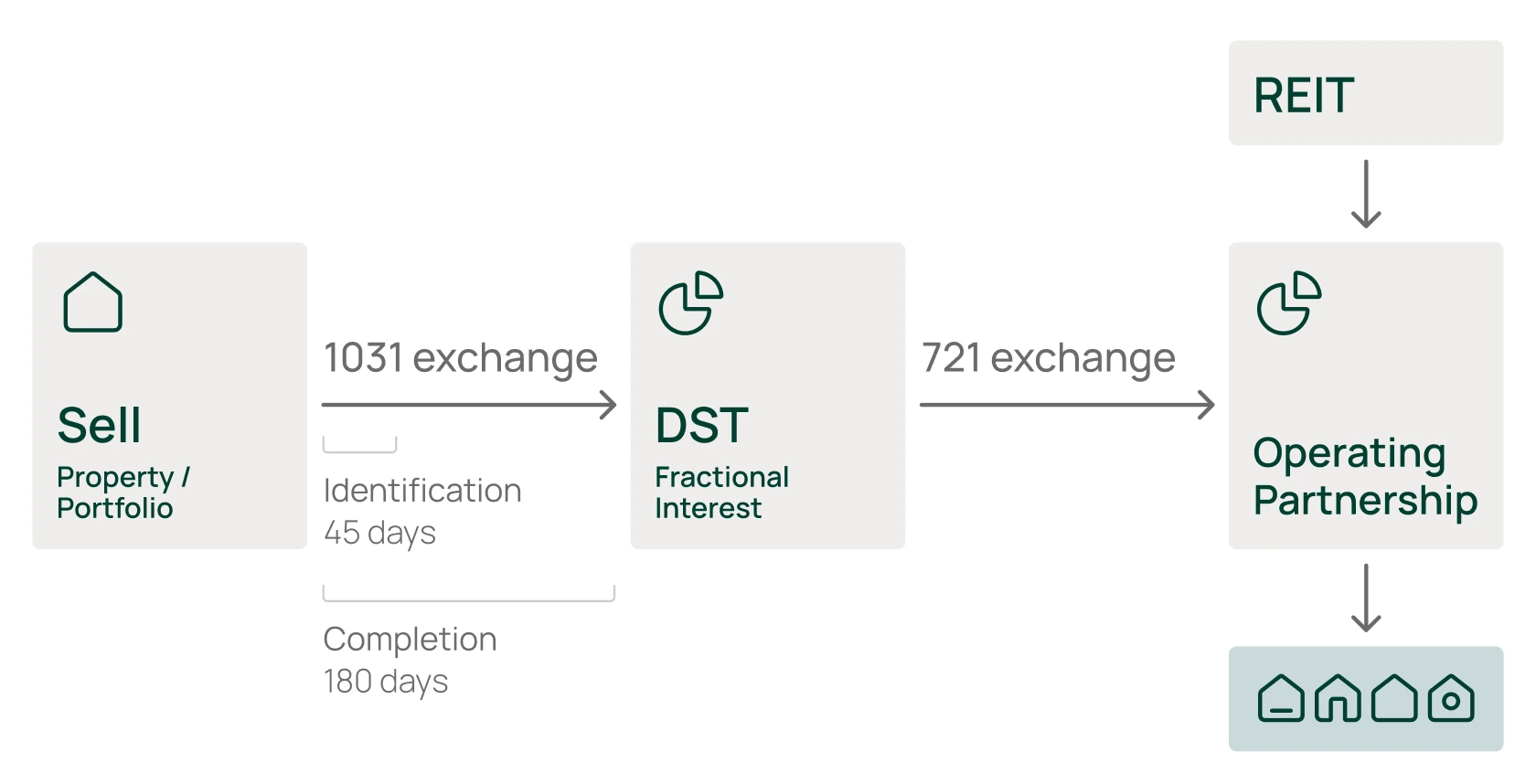
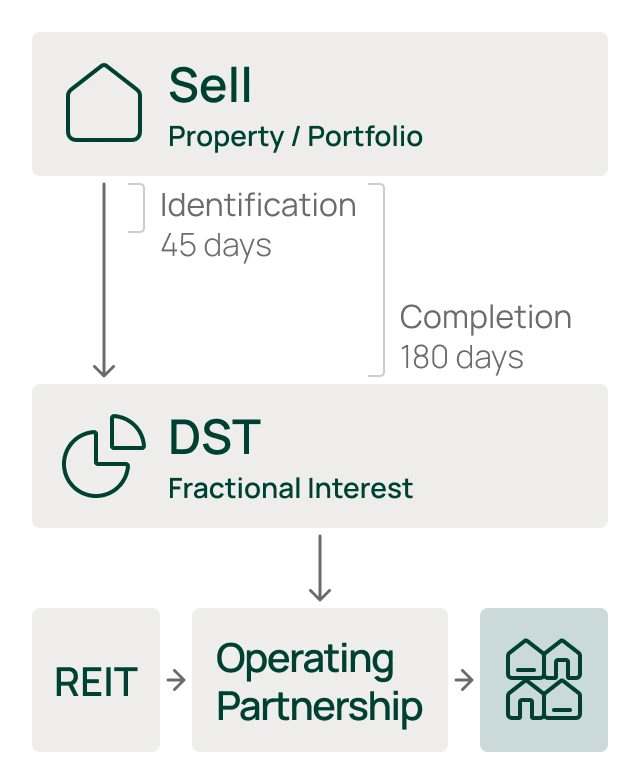
You must identify replacement properties within 45 days of selling your original asset and complete the purchase within 180 days. Missing these windows can trigger a fully taxable event, regardless of market conditions or personal circumstances.
Many DST investments have multi-year hold periods with limited or no ability to exit early. Investors typically have little influence over property decisions, refinancing, or timing of sale, which can create challenges if personal liquidity needs change.
DST structures can involve layered fees, complex ownership arrangements, and limited visibility into ongoing property operations. Compared to direct ownership, investors may receive less frequent reporting and have fewer options to adjust strategy over time.
Because exchange rules require reinvestment to maintain tax deferral, owners may feel pressure to buy replacement assets quickly — even during periods of high prices, rising interest rates, or limited inventory. This can lead to decisions driven by deadlines rather than long-term investment quality.
Meeting owners where they are

While the Flock Fund is often the most seamless and tax-efficient option for rental properties, it isn’t the right fit for every asset. For properties that don’t meet our acquisition criteria, a 1031 exchange into a Delaware Statutory Trust (DST) offers an alternative, allowing owners to defer taxes while moving out of active management and into a diversified, institutional-grade portfolio.
Flock Homes partners with a nationwide network of leading DST providers. Through a DST, investors can access high-quality assets typically reserved for ultra-high-net-worth and institutional investors, helping simplify ownership while keeping their equity working in a professionally managed environment without triggering a large tax bill.
From Property Sale to Passive Ownership
Sell Your Current Property or Portfolio
Flock connects you with a trusted partner broker to list and execute the sale of your investment property.

Transfer Proceeds to a Qualified Intermediary
Sale proceeds are sent directly to a Qualified Intermediary, who holds the funds in escrow to preserve 1031 tax deferral.

A smarter 1031. Institutional DSTs. Easier ownership.
Identify DST Replacement Investments
After closing, you have 45 days to identify replacement investments. Flock connects you with a DST partner to help facilitate the process.

Complete the Exchange and Finalize Your DST Investment
Your QI transfers the escrowed funds into the selected DST investment(s). The entire exchange must be completed within 180 days of the sale.

From Active Landlord to Passive Investor
Learn More About
1031 Exchanges
.svg)